Is a Menstrual Cup Safe? Everything You Need to Know

Switching to a menstrual cup can feel like a leap of faith. You’re moving from familiar disposables to a reusable silicone device, and it’s natural to ask: Is this actually safe for my body?
The short answer is yes. When used correctly, menstrual cups are considered as safe as—and in some cases, safer than—tampons. Here is a factual deep dive into everything you need to know about cup safety, hygiene, and health.
1. Material Safety: What is it made of?
Most reputable menstrual cups are made from medical-grade silicone, TPE (thermoplastic elastomer), or natural latex.
Non-Absorbent: Unlike tampons, which absorb 30% natural moisture along with blood, cups simply collect fluid. This helps maintain your vaginal pH and prevents dryness.
Biocompatible: Medical-grade silicone is designed to live inside the body without causing irritation or off-gassing chemicals.
2. The Risk of TSS (Toxic Shock Syndrome)
One of the biggest concerns is TSS. While TSS is most commonly associated with high-absorbency tampons, it is technically possible with any internal device. However, the risk with cups is extremely low.
The Fact: Studies indicate that because cups are non-absorbent, they do not create the same "breeding ground" for bacteria that cotton fibers can.
Safety Tip: To keep risk at near-zero, never leave your cup in for more than 12 hours and always wash your hands before insertion or removal.

3. Can it get "lost" or interfere with an IUD?
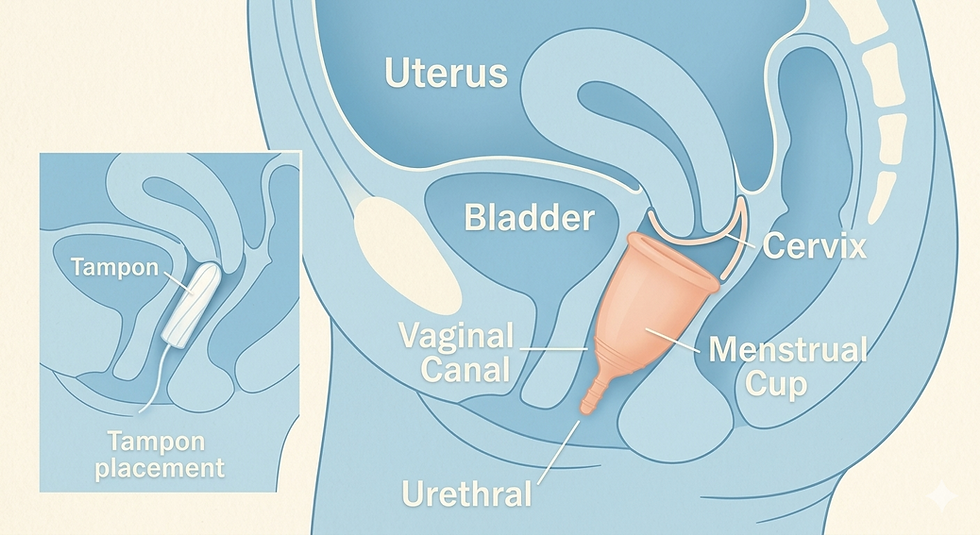
"Lost" Cups: Your cervix acts as a literal wall at the top of the vaginal canal. A cup cannot go into your uterus or get lost in your body. If it sits high, simply relaxing your muscles and using "bearing down" motions will bring it back within reach.
IUD Safety: You can use a cup with an IUD, but you must be careful. Always break the vacuum seal by pinching the base of the cup before pulling. Never pull by the stem alone, as the suction could potentially displace your IUD strings.
4. Essential Hygiene Checklist
To ensure your cup stays a safe, healthy tool, follow the "Golden Rules" of cup care:
The Initial Boil: Before your first use and between every cycle, boil your cup in water for 5–7 minutes to sterilise it - or use the indulge steriliser.
The Daily Rinse: During your period, rinse the cup with warm water or a fragrance-free, oil-free "cup wash." Avoid harsh hand soaps which can cause yeast infections.
Check the Air Holes: Ensure the tiny holes near the rim are clear. These are vital for creating and breaking the suction seal.
The Bottom Line: Menstrual cups are a medically-backed, eco-friendly alternative to disposables. As long as you prioritise hand hygiene and sterilisation, they are a safe and liberating way to manage your cycle.
Is this your first time considering a switch, or are you looking to troubleshoot a cup you already own?


Comments