Menstrual Cup vs Tampons vs Pads: What’s Really Best for Your Body?
- indulgelimited

- Nov 30, 2025
- 3 min read

Choosing Your Period Product Should Feel Empowering — Not Confusing
If you’ve ever stood in a shop aisle wondering which period product is actually best for your body, you’re definitely not alone. With more people switching to menstrual cups, but tampons and pads still being widely used, it’s time to break down the differences clearly — so you can choose what works for your body, your lifestyle, and your comfort.
1. What Exactly Is a Menstrual Cup?

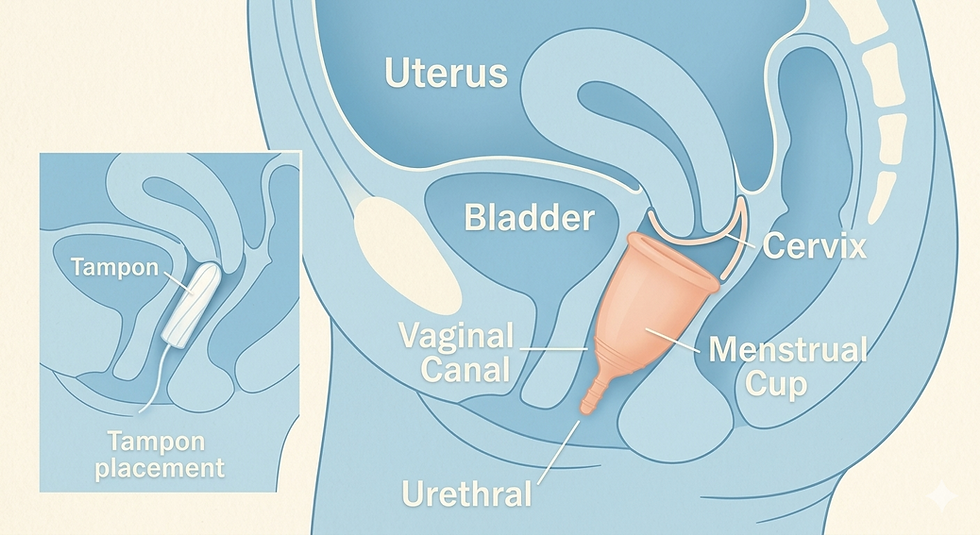
A menstrual cup is a small, flexible, medical-grade silicone cup that sits inside the vaginal canal and collects blood rather than absorbing it.
Why people love them:
Reusable for up to 10 years
Holds 3–4× more than a tampon
Prevents dryness
Helps reduce cramps for some users
Eco-friendly & cost-effective
2. Tampons: A Familiar Favourite

Tampons are inserted into the vaginal canal and absorb menstrual fluid.
Pros:
Convenient and discreet
Easy to find anywhere
Great for swimming and sports
Cons:
Can cause dryness
Need changing every 4–6 hours
Risk of TSS (rare but possible)
Expensive over time
3. Pads: The Classic Option

Pads sit outside the body and absorb menstrual flow through layers of material.
Pros:
No insertion
Good for people new to periods
Variety of sizes and absorbencies
Cons:
Can feel bulky
May move or leak
Needs changing often
Not ideal for physical activities
4. Comfort: Which One Actually Feels Better?
Comfort is totally personal — but here’s what most users say:
Menstrual Cups:
Most people find cups surprisingly comfortable once positioned correctly. You can move, run, sleep, gym, swim — all without feeling it.
Tampons:
Comfortable for many, but dryness is a common complaint, especially at the end of your cycle.
Pads:
A no-insertion option, but may feel bulky, warm, or noticeable during movement.
5. Health & Safety — What’s Best for Your Body?
Menstrual Cup Health Benefits:
Reduces odour (blood isn't exposed to air)
Low risk of infection
Doesn’t strip natural moisture
Means fewer changes → less irritation
Tampons & Pads:
Tampons can cause irritation and dryness
Pads may cause chafing or heat rash
Both can contain chemicals, fragrances or bleaches (depending on brand)
A quick note:When using cups, ALWAYS wash your hands before inserting and sterilise before and after each cycle.
6. Leakage: Which One Protects You Best?
Menstrual Cups
✔ Holds more than a super tampon
✔ Can last up to 12 hours
✔ Less likely to leak when inserted properly
Tampons & Pads
✔ Reliable when changed often
✘ Lower capacity than cups
✘ Not ideal for overnight heavy flow
7. Cost: Which Option Saves You the Most Money?
Menstrual Cup:
One cup lasts up to 10 years.That’s potentially £500–£1,000 saved over a decade.
Tampons/Pads:
Ongoing monthly cost — easily £5–£15 per cycle.
8. Environmental Impact

The Cup:
One cup replaces thousands of disposables.
Tampons & Pads:
Most contain plastics, and take 300–500 years to decompose.
So… What’s REALLY Best for Your Body?
Pads
✔ Best for beginners
✔ No internal insertion
✘ Least discreet
✘ Needs frequent changing
Tampons
✔ Great for sports & swimming
✔ Familiar & accessible
✘ Dryness and irritation
✘ Risk of TSS
Menstrual Cups
✔ Longest wear time
✔ Best for preventing leaks
✔ Most comfortable for many
✔ Amazing for the planet
✔ Lowest long-term cost

Final Verdict:
The Menstrual Cup is the Winner for Body Health, Comfort & Savings
But remember — the best product is the one that makes you feel confident, clean, and comfortable.
If you’re ready to make the switch, explore the Indulge Menstrual Cup Set, complete with:
XS, S, and M cup options
A steriliser
Applicator
Water based lube sachets
Reusable Pad
Information guide
Want to Learn More?
Check out our other helpful guides:
How To Measure Your Cervix Height
Take The Cup Size Quiz: XS, S or M?
How to Insert & Remove a Menstrual Cup Without Stress

Comments