Plastic In Period Products: What You Need to Know


Most of us don’t spend much time reading the "ingredients" on a box of pads or tampons—mostly because, until recently, brands weren't even required to list them. But as we move through 2026, the conversation around "period plastic" has reached a boiling point.
From environmental "forever chemicals" to the sheer volume of waste, here is the breakdown of what’s actually in your period products and why it matters.
The Hidden Plastic Problem
It’s a common misconception that pads are just cotton and stuffing. In reality, conventional menstrual products are heavily engineered plastic goods.
Pads are roughly 90% plastic. A single pack of conventional pads contains as much plastic as five plastic carrier bags. This includes the leak-proof back sheet, the top sheet that touches your skin, and the individual wrappers.
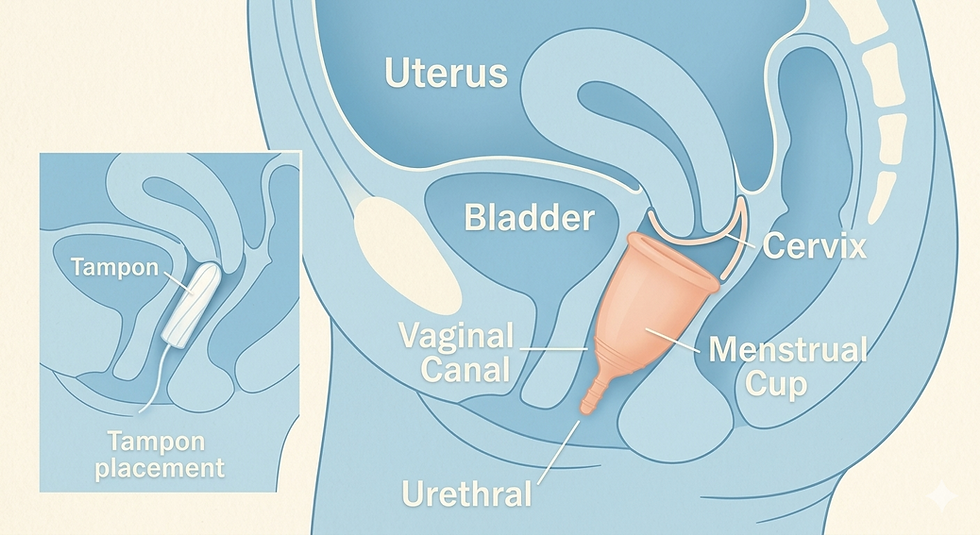
Tampons aren't "natural" either. Most mainstream tampons contain a thin plastic veil to prevent fibre shedding, along with polyester strings and, frequently, plastic applicators made of polyethylene or polypropylene.
The "500-Year" Legacy: Because of this high plastic content, a single pad can take 500 to 800 years to decompose. To put that in perspective: if a woman in the 1500s had used a modern plastic pad, it would only just be breaking down today.
Health Concerns: More Than Just Waste
Recent 2025 and 2026 studies have highlighted that the issue isn't just "out there" in the ocean; it's also about what's being absorbed by your body. The vaginal and vulvar tissues are among the most absorbent in the human body, making chemical exposure a valid concern.
Chemical Type | Found In | Potential Risks |
PFAS ("Forever Chemicals") | 48% of pads, 65% of period underwear | Hormonal disruption, reproductive issues. |
Phthalates | Adhesives and plastic layers | Endocrine disruption, linked to endometriosis. |
Bisphenols (BPA) | Plastic components & packaging | Mimics estrogen; linked to fertility problems. |
Fragrances | "Scented" versions | Contact dermatitis and pH imbalance. |
A Note on Transparency: In a 2026 study by the University of the Free State, researchers found that every single pad and liner tested contained at least two endocrine-disrupting chemicals—even those marketed as "chemical-free."
The Environmental Toll
The scale of period waste is staggering. In the UK alone, over 3 billion single-use products are used annually, generating roughly 28,000 tonnes of waste.
A significant portion of this waste ends up in our waterways. In fact, approximately 10% of sewage-related debris found on beaches consists of plastic from menstrual products. When these items are flushed (which they never should be!), they contribute to "fatbergs" and break down into microplastics that enter the food chain.
Your Roadmap to a Plastic-Free Period
The good news? You have more options in 2026 than ever before. You don't have to switch everything overnight, but small changes make a massive dent in your personal plastic footprint.
Menstrual Cups & Discs: Made from medical-grade silicone (not plastic), these can last up to 10 years. They have the lowest environmental impact of any option.
Period Underwear: Modern versions are leak-proof and comfortable. Look for brands that specifically certify they are PFAS-free.
Reusable Cloth Pads: These work exactly like disposables but snap around your underwear. They are typically made from organic cotton or bamboo.
Plastic-Free Disposables: If reusables aren't for you, brands like Natracare or Grace & Green offer 100% organic cotton products with compostable bioplastic backings.
Final Thought
Switching your period routine is a personal choice, and "period poverty" means not everyone has the luxury of choosing expensive reusables. However, by demanding better labeling and opting for plastic-free options when possible, we can protect both our bodies and the planet.
Ready to revolutionize your cycle?

Comments