Troubleshooting Menstrual Cup Fit: Resolving Menstrual Cup Fit Challenges

Switching to a menstrual cup can feel like a breath of fresh air. It’s eco-friendly, cost-effective, and often more comfortable than pads or tampons. But let’s be honest - getting the fit just right can be tricky. If you’ve ever felt unsure about your cup’s fit or worried about leaks, you’re not alone. I’ve been there too, and I want to share some practical tips to help you troubleshoot menstrual cup fit challenges with confidence.
Understanding Troubleshooting Menstrual Cup Fit
Finding the perfect fit for your menstrual cup is a bit like finding the right pair of shoes. It takes some trial and error, but once you get it, you’ll wonder why you ever struggled. The key is understanding your body and how the cup interacts with it.
Menstrual cups come in different sizes, shapes, and firmness levels. Your cervix height, flow, and vaginal tone all play a role in which cup will work best for you. If your cup feels uncomfortable, leaks, or slips out, it’s usually a sign that the fit isn’t quite right.
Here’s a simple way to start troubleshooting:
Check your cervix height: Use your finger to feel where your cervix sits during your period. Is it low, medium, or high? This helps you choose a cup length that fits comfortably.
Consider cup firmness: Softer cups are great if you have a sensitive bladder or a low cervix. Firmer cups open more easily but might feel less comfortable if you’re sensitive.
Look at cup size: Larger cups hold more but might be harder to insert or remove. Smaller cups are easier to handle but may need more frequent emptying.
Remember, it’s perfectly normal to try a few cups before finding your match. Don’t rush it - your comfort is worth the effort.

What are common mistakes when using a cup?
Sometimes, the fit issues come down to how the cup is used rather than the cup itself. Here are some common mistakes that can cause discomfort or leaks:
Not folding the cup properly: There are several folding techniques like the C-fold, punch-down fold, or 7-fold. Experiment to find which one works best for you.
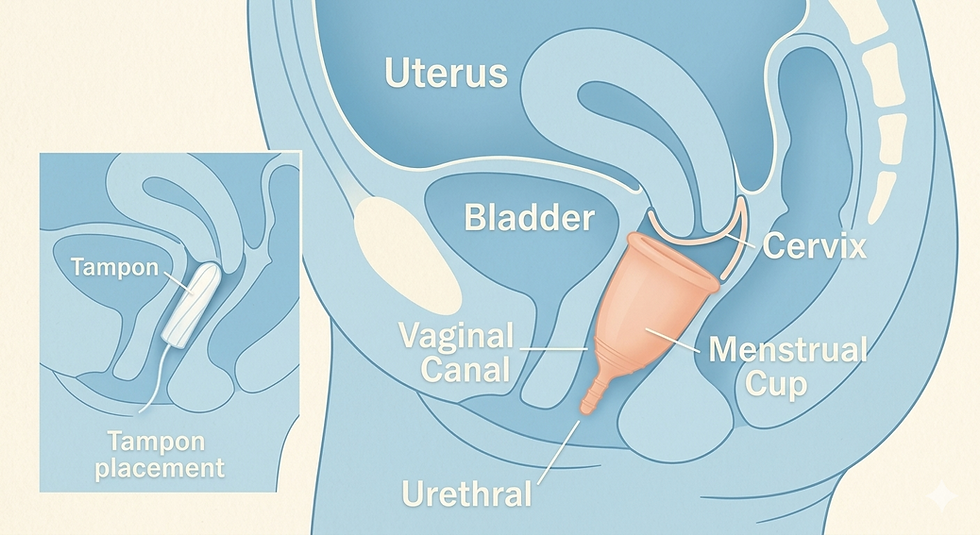
Inserting the cup too high or too low: The cup should sit below your cervix, not pressing against it or too far down.
Not fully opening the cup: After insertion, the cup needs to pop open to create a seal. If it stays folded, leaks are likely.
Ignoring your body’s signals: If you feel discomfort or pain, don’t push through it. Adjust the cup or try a different size or firmness.
Not trimming the stem: If the stem pokes or irritates, trimming it slightly can make a big difference.
Taking your time with insertion and removal helps build confidence. Use water-based lubricant if needed, and relax your muscles to make the process smoother.
How to fix leaks and discomfort
Leaks are the most common sign that your cup isn’t fitting right. But don’t worry - leaks don’t mean failure. They’re just clues to what needs adjusting.
Here’s what you can do:
Check the seal: Run your finger around the base of the cup once inserted. You should feel a slight suction or resistance.
Reposition the cup: Sometimes a small twist or push can help the cup open fully and seal better.
Try a different fold: If the cup isn’t opening properly, switch up your folding technique.
Experiment with cup size or firmness: If leaks persist, a different size or a firmer cup might be the answer.
Empty and clean regularly: Overfilling can cause leaks, so don’t wait too long between changes.
Discomfort often comes from the cup pressing on sensitive areas or being too long. If you feel pain, try trimming the stem or switching to a shorter cup. Also, check your posture and relax your pelvic muscles during insertion.

When to seek help or try alternatives
If you’ve tried all the tips and still face challenges, don’t be discouraged. Sometimes, your body just needs a bit more time to adjust. But if discomfort or leaks continue, it might be worth consulting a healthcare professional. They can check for any anatomical issues or offer personalised advice.
Also, remember that menstrual cups aren’t the only sustainable option. You might find that period underwear or reusable pads suit you better. The goal is to find what makes you feel comfortable and confident during your period.
Embracing the journey to comfort and sustainability
Switching to a menstrual cup is a journey, not a race. It’s about discovering what works best for your unique body and lifestyle. Don’t be afraid to experiment, ask questions, and take breaks if needed.
By overcoming these menstrual cup fit challenges, you’re not just making your period easier - you’re also making a positive impact on the planet. Every cup used means fewer disposable products in landfill. That’s something to feel proud of.
If you want to dive deeper into menstrual cup fit issues, there are plenty of resources and communities ready to support you. Remember, you’re not alone on this path.
Keep going, and soon you’ll be enjoying the freedom and comfort that comes with a well-fitting menstrual cup. You’ve got this!
Thank you for reading! If you found this helpful, feel free to share your own tips or questions in the comments below.

Comments